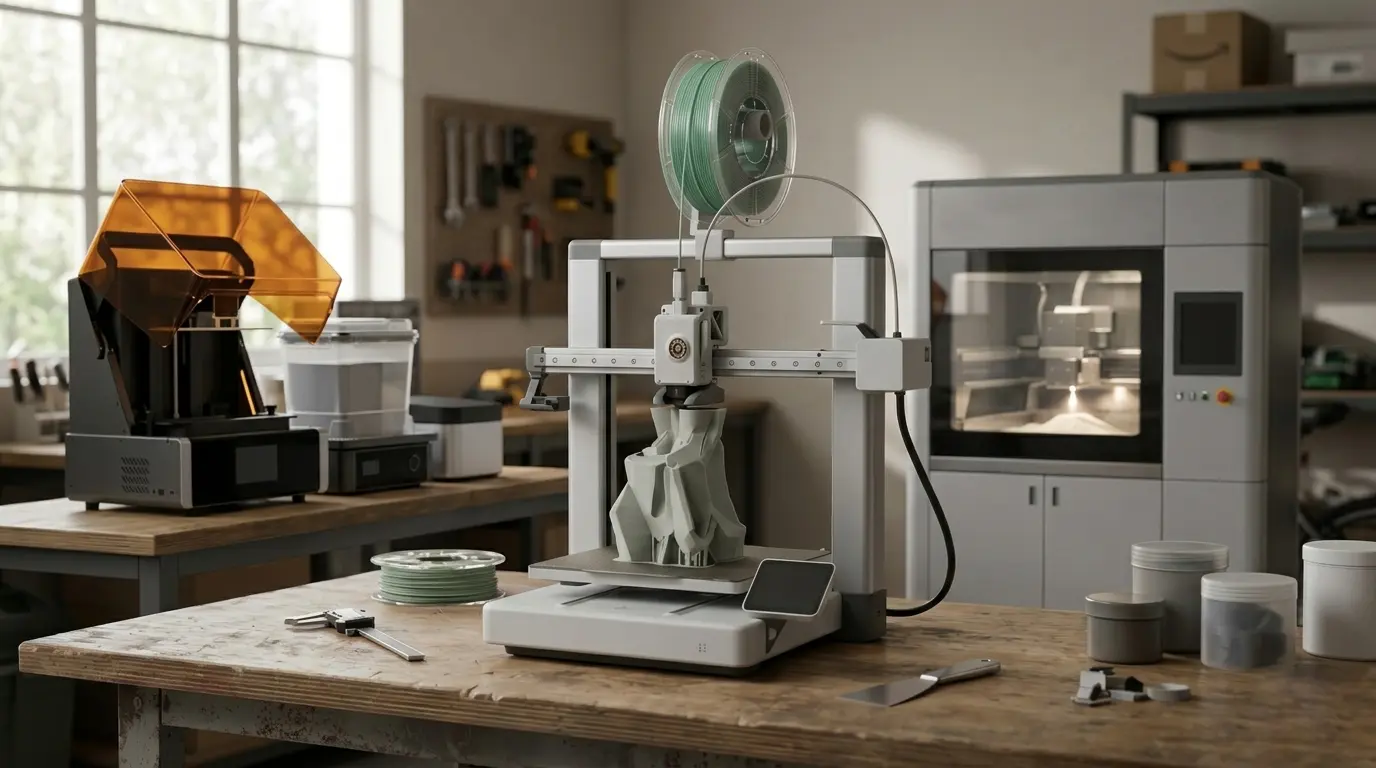
The 2026 3D Printing Era: When Creativity is No Longer Exclusively for Engineers!
Do you remember back in the 2010s, when mentioning a

3D printing has been redefining the way we create physical objects from digital designs. However, standing before too many choices regarding printing methods often leaves beginners feeling confused.
Understanding the differences between these printing methods will save you time and money, ensuring you achieve the expected product quality. In this article, we will analyze three core technologies in depth to help you make the most accurate decision.
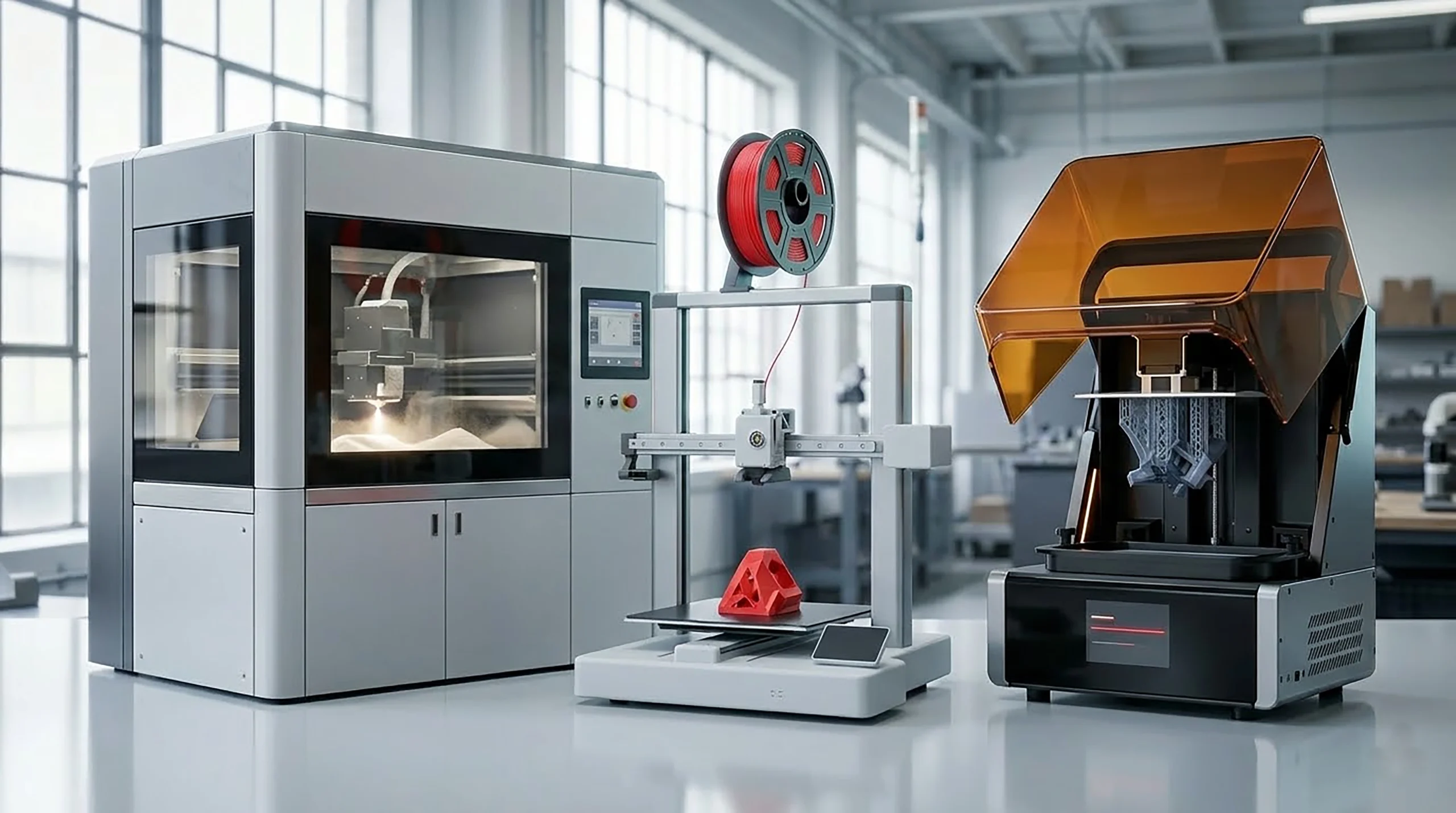
To choose the right tool, you first need to understand the operating principles of the three most popular types of 3D printing: FDM, SLA, and SLS. Each technology represents a different method of material processing.

FDM is the most common technology thanks to its simplicity and low cost. The machine operates by melting thermoplastic filament and extruding it through a nozzle to draw layers stacked on top of one another.
Materials: Filament-based plastics such as PLA, PETG, and ABS.
Pros: Low machine and material costs; easy to operate at home or in an office environment.
Cons: Visible layer lines on the product surface; average level of detail.

SLA utilizes a vat of light-sensitive liquid resin. Instead of melting plastic, the machine uses a UV light source to precisely solidify each liquid layer into a solid object.
Materials: Specialized liquid resin.
Pros: Ultra-high resolution; absolute smooth surface finish; perfectly suited for micro-sized details.
Cons: Complex post-processing workflow (requires washing and UV curing); resin materials carry a higher cost than filament.
SLS is an industrial-grade technology. It utilizes a high-power laser beam to sinter (fuse) fine polymer powder particles into a solid mass.
Materials: Typically Nylon powders (PA11, PA12).
Pros: Requires no support structures; finished products possess exceptionally high mechanical durability and strong aesthetics.
Cons: SLS printers are highly expensive and require a dedicated operating environment.
Below is a comparison chart of the most critical parameters to help you easily evaluate the options:
| Property | FDM (Filament) | SLA (Liquid Resin) | SLS (Plastic Powder) |
| Accuracy | Medium | Very High | High |
| Surface Finish | Rough (visible layers) | Very Smooth | Matte/Textured |
| Mechanical Strength | Medium | Low (brittle) | Very High |
| Investment Cost | Lowest | Medium | Very High |
For individuals looking to explore the manufacturing world or build sturdy consumer goods, choosing standard FDM systems is the absolute smartest choice. This popular method utilizes affordable FDM printing hardware to melt and extrude thermoplastic filaments layer by layer into highly functional shapes. It is the ultimate solution for fabricating rugged replacement components, custom organizational tools, or imaginative toys that do not require microscopic surface perfection. Because the raw materials are highly economical and widely accessible, it provides an exceptionally forgiving environment for beginners and hobbyists alike.
When your creative vision demands absolute visual perfection and incredibly flawless structural textures, transitioning to liquid resin systems becomes completely non-negotiable. Opting for sophisticated SLA resin tech allows you to leverage powerful ultraviolet lasers to cure liquid photopolymers into highly intricate, glass-smooth objects. This pristine process is the premier industry standard for high-end jewelry design, premium tabletop miniatures, and ultra-precise dental components requiring micrometer accuracy. It represents the ultimate creative tool for professional designers who refuse to compromise on microscopic aesthetic details.
For corporate entities and independent engineers focused on manufacturing heavy-duty, load-bearing mechanical components, industrial powder beds offer unparalleled strength. Utilizing high-end SLS industrial printing tech allows a focused laser beam to sinter nylon powder into incredibly complex, durable structures without needing any temporary support material. This brilliant characteristic grants engineers total geometric freedom, enabling them to fabricate intricate moving assemblies and rugged end-use parts in a single run. It stands as the absolute pinnacle of small-batch industrial production, ensuring your components effortlessly withstand intense mechanical stress and high-temperature environments.
Whether you choose FDM for its convenience, SLA for its fine refinement, or SLS for its industrial strength, understanding the core nature of each type will help you unlock the full potential of this technology. Start with your real-world needs to choose the most suitable “companion.”
Do you remember back in the 2010s, when mentioning a

Architects of the Future: Infusing Living Spaces with Artistry Through